
Pergola vs Gazebo – Best Choice for Your Backyard
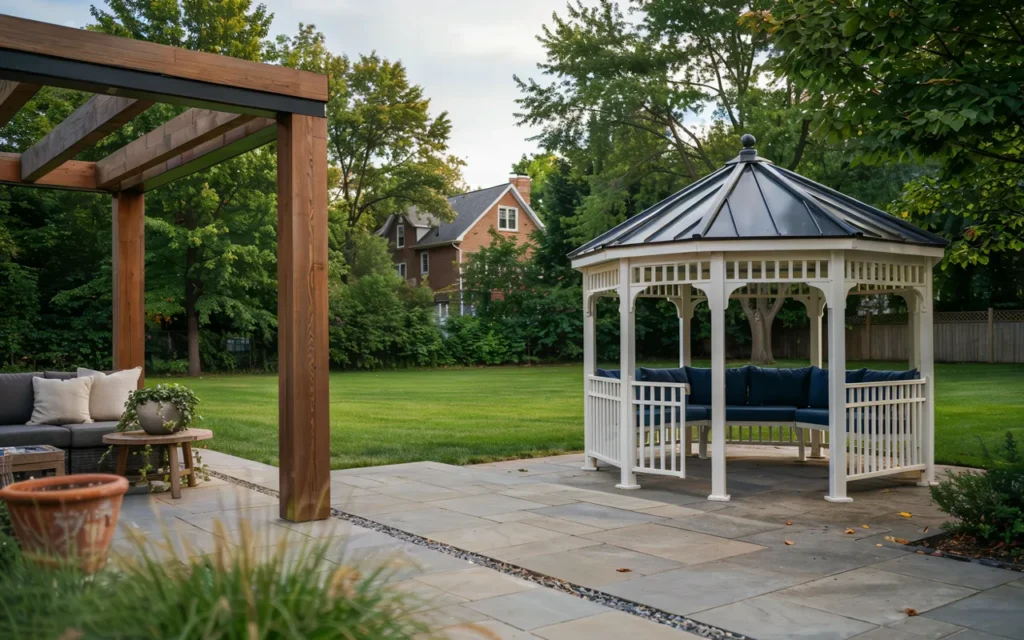
Your backyard has more potential than just a patch of grass. With the right outdoor structure, it can become a comfortable entertainment area, a relaxing retreat, or an extension of your outdoor living space.
But when homeowners start planning an upgrade, one common question appears:
Should you build a pergola or a gazebo?
The answer depends on how you want to use your outdoor space. A pergola creates an open, modern outdoor living area with filtered sunlight and architectural appeal, while a gazebo provides a more enclosed shelter designed for stronger protection from sun and weather.
For homeowners in Toronto, ON, where outdoor spaces need to handle hot summers, rain, wind, and changing seasons, choosing between these structures requires more than comparing appearances. You need to consider functionality, maintenance, design goals, property layout, and long-term value.
This guide explains the key differences between a pergola vs gazebo, including design, materials, costs, benefits, drawbacks, and how working with an experienced custom pergola builder or gazebo builder can help you create the perfect backyard addition.
Pergola vs Gazebo What Is the Difference?
A pergola and gazebo are both outdoor structures designed to improve backyard living spaces, but they serve different purposes. A pergola has an open or adjustable roof that provides partial shade and a modern outdoor feel. A gazebo has a fully covered roof that offers better protection from rain and weather. The best choice depends on your lifestyle, budget, and desired level of shelter.
Pergola vs Gazebo: Understanding the Basic Difference
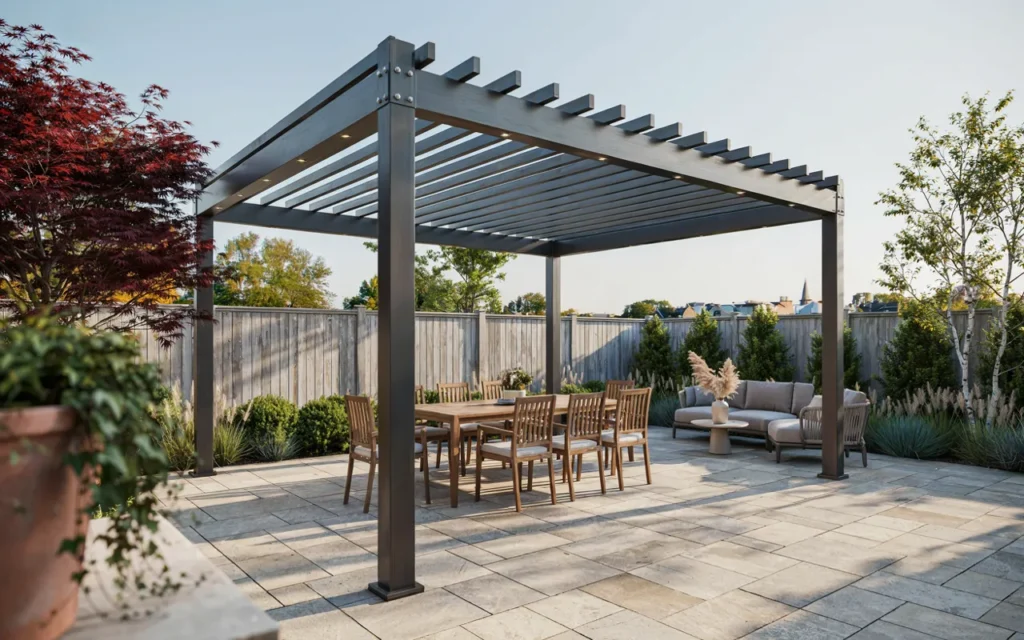
Before choosing between these two outdoor structures, it is important to understand how they are designed and what purpose each one serves.
Both options can create beautiful outdoor gathering spaces, but their construction, appearance, and functionality are different.
What Is a Pergola?
A pergola is an outdoor structure made with vertical posts supporting an open framework roof. Traditional pergolas use horizontal beams and rafters that allow sunlight and airflow to pass through.
Modern pergolas can also include:
- Adjustable louvered roofs
- Retractable shade systems
- Privacy screens
- Integrated lighting
- Outdoor curtains
- Weather-resistant materials
A pergola is often installed over:
- Patios
- Decks
- Outdoor kitchens
- Dining areas
- Poolside spaces
The main purpose of a pergola is to define an outdoor area while maintaining an open connection with nature.
For homeowners who want a stylish backyard extension without completely enclosing the space, a pergola is often the preferred choice.
What Is a Gazebo?
A gazebo is a freestanding outdoor structure with a permanent roof supported by columns or posts.
Unlike a pergola, a gazebo usually provides complete overhead coverage. Many gazebo designs feature:
- Solid roofing
- Built-in flooring
- Railings
- Screens
- Curtains
- Seating areas
Gazebos are commonly used as dedicated outdoor rooms for:
- Family gatherings
- Dining
- Relaxation
- Hot tub areas
- Garden retreats
Because of their enclosed roof design, gazebos generally provide better protection from rain and direct sunlight compared with traditional open pergolas.
Pergola vs Gazebo: Quick Comparison Table
| Feature | Pergola | Gazebo |
| Roof Style | Open, slatted, louvered, or retractable | Fully covered roof |
| Weather Protection | Moderate | High |
| Airflow | Excellent | Good |
| Design Style | Modern and architectural | Classic and standalone |
| Best For | Patios, outdoor kitchens, entertaining | Relaxation spaces and sheltered seating |
| Installation | Usually simpler | More complex |
| Privacy Options | Easy to customize | Naturally more private |
| Visual Impact | Blends with home design | Creates a focal point |
| Maintenance | Lower depending on materials | Higher due to roofing components |
Pergola vs Gazebo: Which One Provides Better Weather Protection?
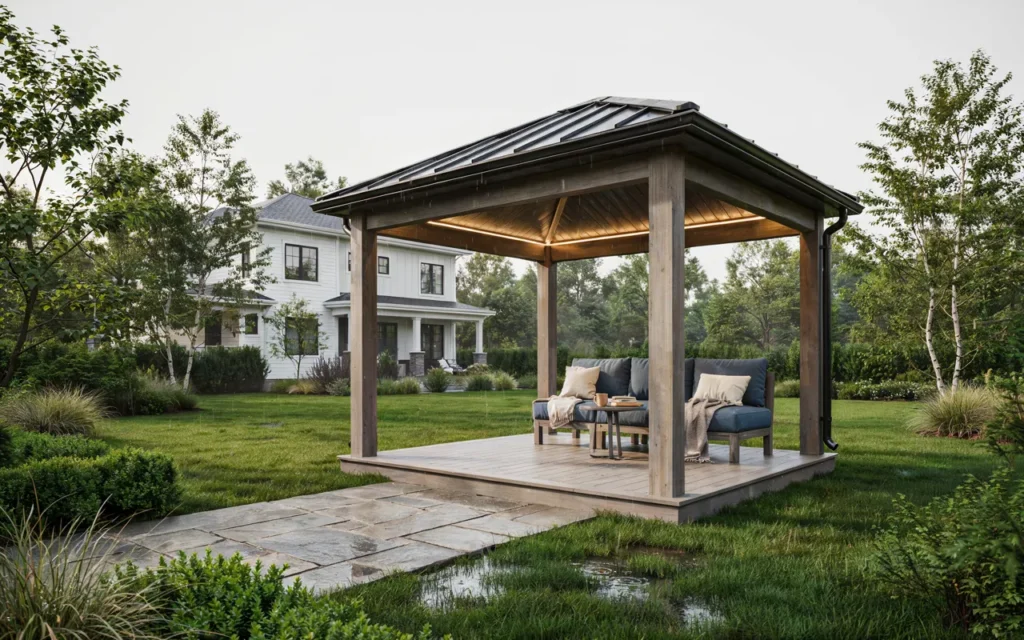
Weather protection is one of the biggest differences homeowners consider when comparing a pergola vs gazebo.
Toronto weather can be unpredictable. A sunny afternoon can quickly turn into rain, especially during spring and summer. Your outdoor structure should match how often you want to use your backyard.
Pergola Weather Protection
Traditional pergolas provide partial shade rather than complete coverage.
The open roof design allows:
- Natural sunlight
- Better airflow
- A connection with the outdoors
However, traditional pergolas may not fully protect against:
- Heavy rain
- Snow accumulation
- Strong winds
A modern louvered pergola can improve protection because the roof panels can adjust based on weather conditions.
Best choice if you want:
- Fresh air
- Natural lighting
- A stylish outdoor lounge
- Flexible shade control
Gazebo Weather Protection
Gazebos provide stronger protection because they have a permanent roof structure.
They are better suited for homeowners who want:
- Rain protection
- More consistent shade
- A sheltered outdoor room
- Longer seasonal usability
A gazebo can be especially useful for Toronto homeowners who want to enjoy outdoor spaces during unpredictable weather conditions.
Best choice if you want:
- Maximum shelter
- Outdoor dining regardless of weather
- A dedicated relaxation area
- A more enclosed environment
Pergola vs Gazebo: Design and Aesthetic Differences
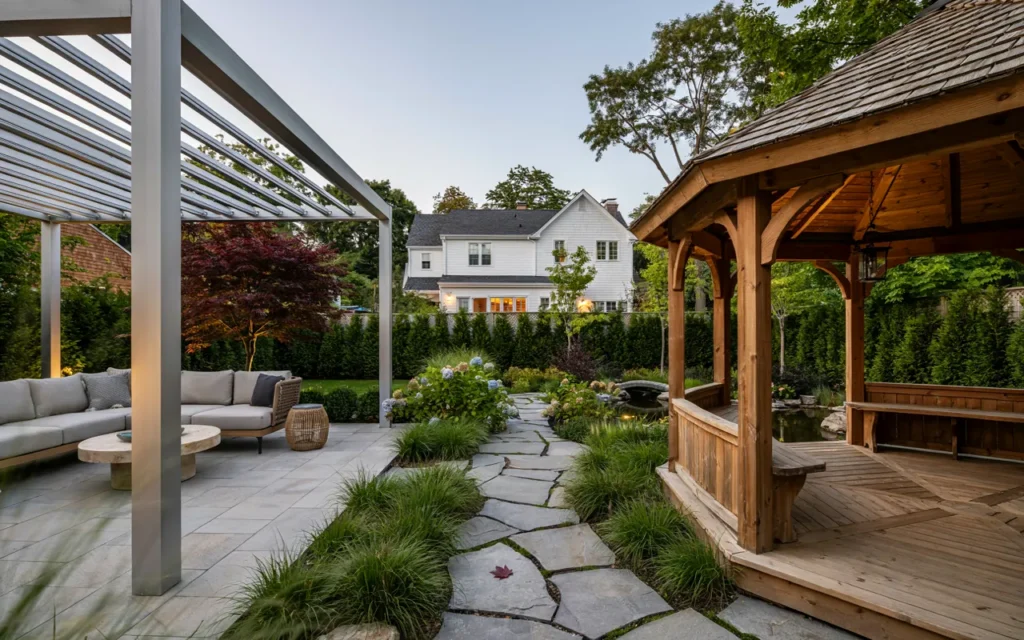
Your backyard structure should not only be functional it should complement your home.
The right choice can transform your outdoor area into a natural extension of your property.
Pergola Design Advantages
Pergolas are popular because they offer design flexibility.
A custom pergola builder can create designs that match:
- Contemporary homes
- Modern landscaping
- Minimalist outdoor spaces
- Luxury backyard renovations
Popular pergola styles include:
Modern Aluminum Pergolas
These provide:
- Clean lines
- Low maintenance
- Long-term durability
- Contemporary appearance
Wooden Pergolas
Wood creates:
- Natural warmth
- Classic beauty
- A garden-inspired atmosphere
Common materials include:
- Cedar
- Pressure-treated wood
- Timber
Attached Pergolas
These connect directly to your home and create a seamless transition between indoor and outdoor spaces.
Gazebo Design Advantages
Gazebos create a stronger visual focal point.
A gazebo builder can customize:
- Roof style
- Shape
- Flooring
- Screens
- Lighting
- Seating options
Popular gazebo styles include:
- Traditional octagonal designs
- Modern square gazebos
- Poolside gazebos
- Garden gazebos
A gazebo often feels like a separate outdoor destination rather than an extension of the house.
Pergola vs Gazebo: Cost Considerations
Budget is another major factor when deciding between a pergola vs gazebo.
The final price depends on:
- Size
- Materials
- Customization
- Foundation requirements
- Roofing system
- Installation complexity
Pergola Cost Factors
Pergolas are often more affordable because their design requires fewer structural components.
Costs increase when adding:
- Motorized louvers
- Premium materials
- Built-in lighting
- Privacy walls
- Custom designs
A custom pergola builder can design a solution based on your available space and budget.
Gazebo Cost Factors
Gazebos can require a larger investment because they usually involve:
- More materials
- Permanent roofing
- Flooring systems
- Additional structural support
However, the extra investment provides a more complete outdoor shelter.
For homeowners who frequently host guests or want a dedicated backyard room, a gazebo may provide better long-term value.
Choosing Between a Pergola and Gazebo: A Practical Decision Guide
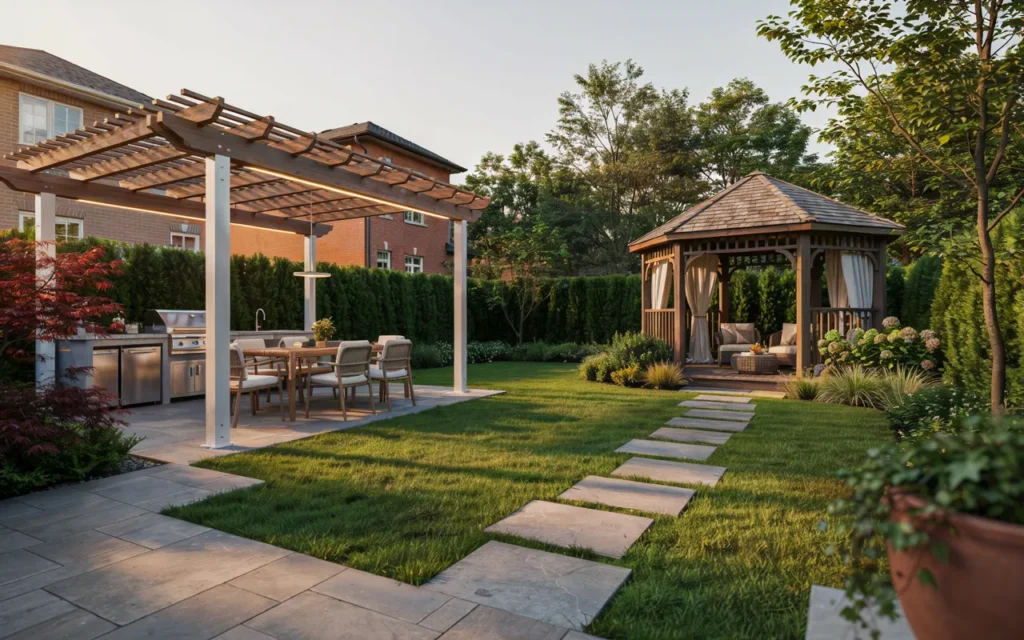
The right choice depends on how you plan to use your backyard.
Ask yourself these questions:
1. How Will You Use the Space?
Choose a pergola if you want:
- Outdoor dining
- Casual gatherings
- A modern lounge area
- A connection with your garden
Choose a gazebo if you want:
- A quiet retreat
- Full weather protection
- A covered entertainment area
- A separate backyard destination
2. How Much Space Do You Have?
A pergola works well in:
- Smaller patios
- Narrow yards
- Spaces connected to the home
A gazebo usually requires more open space because it creates a standalone structure.
3. Do You Want an Open or Enclosed Feeling?
A pergola keeps the backyard feeling open and spacious.
A gazebo creates a more private and cozy atmosphere.
Your lifestyle should guide the decision.
Pergola vs Gazebo: Best Choice for Toronto Homeowners
Choosing between a pergola vs gazebo becomes more important when considering Toronto’s unique climate and outdoor lifestyle.
Toronto homeowners experience:
- Hot summers with intense sunlight
- Heavy spring and fall rainfall
- Snow and freezing temperatures during winter
- Changing outdoor comfort needs throughout the year
Because of this, your outdoor structure should be designed based on both aesthetics and performance.
A beautiful structure that does not match your lifestyle may become an unused feature. The goal is to create an outdoor space that you will actually enjoy using.
For homeowners working with an experienced outdoor construction company like EverStruct, the design process should consider your property layout, architecture, landscaping, and long-term goals.
Pergola vs Gazebo for Toronto Weather Conditions
When comparing a pergola vs gazebo, weather resistance is often the deciding factor.
Pergola Considerations in Toronto
A pergola works exceptionally well for homeowners who want:
- A shaded patio area
- Better airflow during summer
- A modern outdoor entertainment zone
- A visually open backyard design
However, traditional pergolas require thoughtful planning for Canadian weather.
Important considerations include:
Material Selection
Durable materials such as:
- Aluminum
- Cedar wood
- Pressure-treated lumber
can improve longevity and reduce maintenance requirements.
Roof Options
Modern pergolas can include:
- Adjustable louver systems
- Retractable fabric covers
- Polycarbonate panels
These options provide more flexibility compared with traditional open-beam designs.
Gazebo Considerations in Toronto
A gazebo can be a strong choice for homeowners who want a more protected outdoor environment.
Because gazebos typically have permanent roofs, they provide:
- Better rain protection
- More shade coverage
- A dedicated outdoor room feeling
A professionally built gazebo can become a year-round backyard feature when combined with:
- Outdoor heating
- Lighting
- Comfortable furniture
- Privacy screens
The right choice depends on whether you prioritize openness or shelter.
Pergola vs Gazebo: Maintenance Requirements
Maintenance is another important factor many homeowners overlook.
The structure you choose should fit your available time and willingness to maintain it.
Pergola Maintenance
Pergola maintenance depends heavily on materials.
Wood Pergola Maintenance
Wood structures may require:
- Staining
- Sealing
- Inspection for moisture damage
- Occasional repairs
Aluminum Pergola Maintenance
Aluminum options usually require less upkeep.
Maintenance typically includes:
- Cleaning debris
- Checking moving components
- Inspecting hardware
A custom pergola builder can recommend materials based on your maintenance expectations.
Gazebo Maintenance
Gazebo maintenance usually involves additional components because of the enclosed roof design.
You may need to maintain:
- Roofing materials
- Gutters
- Screens
- Flooring
- Structural connections
A high-quality gazebo builder will consider drainage, snow load, and material durability during installation.
Common Mistakes Homeowners Make When Choosing Between a Pergola and Gazebo
Many homeowners focus only on appearance when deciding between a pergola vs gazebo.
However, a successful outdoor project requires looking beyond design.
Here are common mistakes to avoid.
Mistake 1: Choosing Based Only on Appearance
A structure may look attractive online but fail to meet your practical needs.
For example:
A homeowner who frequently hosts outdoor dinners may regret choosing an open pergola without weather protection.
A homeowner who wants an airy garden space may find a gazebo too enclosed.
Always start with function before style.
Mistake 2: Ignoring Backyard Size
The scale of your outdoor structure matters.
A large gazebo in a small backyard can overwhelm the space.
A small pergola in a large backyard may feel disconnected.
The design should maintain balance between:
- Home size
- Patio dimensions
- Landscaping
- Outdoor furniture
Mistake 3: Forgetting About Future Use
Think beyond today.
Ask:
- Will your family grow?
- Will you entertain more guests?
- Will you add an outdoor kitchen?
- Will you install lighting or heating?
A flexible design creates more long-term value.
Mistake 4: Choosing Poor Quality Materials
Outdoor structures face constant exposure to:
- Sun
- Rain
- Snow
- Temperature changes
Low-quality materials can lead to:
- Faster deterioration
- Higher repair costs
- Poor appearance over time
Working with an experienced builder helps ensure proper material selection and construction.
Custom Pergola Builder vs Gazebo Builder: Why Professional Installation Matters
A professionally designed outdoor construction project is more than four posts and a roof.
Experienced builders consider:
- Structural stability
- Local building requirements
- Material performance
- Drainage
- Foundation preparation
- Design integration
A skilled custom pergola builder can create a structure that matches your home architecture while maximizing your available space.
A professional gazebo builder can design a durable outdoor room that provides comfort and protection for years.
How to Choose the Right Outdoor Structure: A Simple Checklist
Use this checklist before making your decision.
Choose a Pergola If You Want:
A modern outdoor living space
Partial shade with natural airflow
A stylish patio extension
A flexible design
A structure that blends with landscaping
Choose a Gazebo If You Want:
Full roof protection
A dedicated outdoor room
More privacy
Better rain coverage
A traditional backyard focal point
Can You Combine a Pergola and Gazebo?
Some homeowners do not need to choose only one.
A combination approach can create multiple outdoor zones.
For example:
- Pergola over an outdoor kitchen
- Gazebo near a garden seating area
- Pergola walkway connecting backyard spaces
This approach allows homeowners to enjoy both openness and shelter.
A well-planned backyard design can transform different areas into functional outdoor rooms.
Why EverStruct Is the Right Choice for Your Outdoor Project
When investing in an outdoor structure, experience and craftsmanship matter.
EverStruct helps Toronto homeowners create custom outdoor solutions designed around:
- Lifestyle needs
- Property layout
- Architectural style
- Long-term durability
Whether you need a custom pergola builder for a modern backyard upgrade or a gazebo builder for a sheltered outdoor retreat, professional planning ensures the final structure fits your vision.
Instead of choosing a standard solution, a customized design gives you a space that feels like a natural extension of your home.
Ready to transform your backyard into a functional outdoor living space? Contact EverStruct to discuss your pergola or gazebo project and explore the best design option for your Toronto home.
Frequently Asked Questions About Pergola vs Gazebo
1. What is the main difference between a pergola and a gazebo?
The biggest difference between a pergola and gazebo is the roof design. A pergola usually has an open or adjustable roof that provides partial shade, while a gazebo has a permanent roof that offers more complete protection from weather.
2. Is a pergola cheaper than a gazebo?
In many cases, a pergola can cost less because it generally requires fewer materials and a simpler structure. However, the final cost depends on size, materials, customization, and installation requirements.
3. Which is better for rain protection: a pergola or gazebo?
A gazebo typically provides better rain protection because it has a fully covered roof. A pergola with a retractable or louvered roof can offer improved weather flexibility.
4. Does a pergola add value to a home?
A well-designed pergola can improve outdoor functionality and increase the appeal of a property by creating an attractive outdoor living area.
5. Can a pergola withstand Toronto winters?
Yes, a properly designed pergola with suitable materials and structural support can handle Canadian weather conditions. Material choice and professional installation are important factors.
6. Should I hire a pergola builder or build one myself?
DIY projects may work for small structures, but hiring an experienced pergola builder ensures proper design, durability, structural safety, and compliance with local requirements.
7. Which lasts longer, a pergola or a gazebo?
Both pergolas and gazebos can last for many years when they are built with quality materials and maintained properly. A well-built aluminum pergola can offer excellent durability with minimal maintenance, while a professionally constructed gazebo with a strong roof system can provide long-term outdoor shelter. The lifespan depends on material quality, construction methods, weather exposure, and regular care.
8. Do I need a permit to build a pergola or gazebo in Toronto?
Permit requirements for a pergola or gazebo in Toronto depend on factors such as size, height, location, attachment to your home, and local building regulations. Larger or more permanent structures may require approval. Before construction, it is recommended to check the current City of Toronto building permit requirements or work with an experienced outdoor builder who understands local regulations.
9. Can I install a pergola or gazebo on an existing patio?
Yes, both structures can often be installed on an existing patio if the foundation and surface can support the additional weight. A professional builder will evaluate factors such as patio condition, anchoring options, drainage, and structural stability before installation to ensure a safe and long-lasting result.
10. Which is better for an outdoor kitchen: a pergola or gazebo?
A pergola is often a popular choice for outdoor kitchens because it provides ventilation, an open atmosphere, and enough space for cooking and entertaining. However, a gazebo can work well if you want more weather protection and a covered dining experience. The best choice depends on whether airflow or maximum shelter is your priority.