
Composite Deck vs Wood Deck – Which Is Better for Toronto Homes?
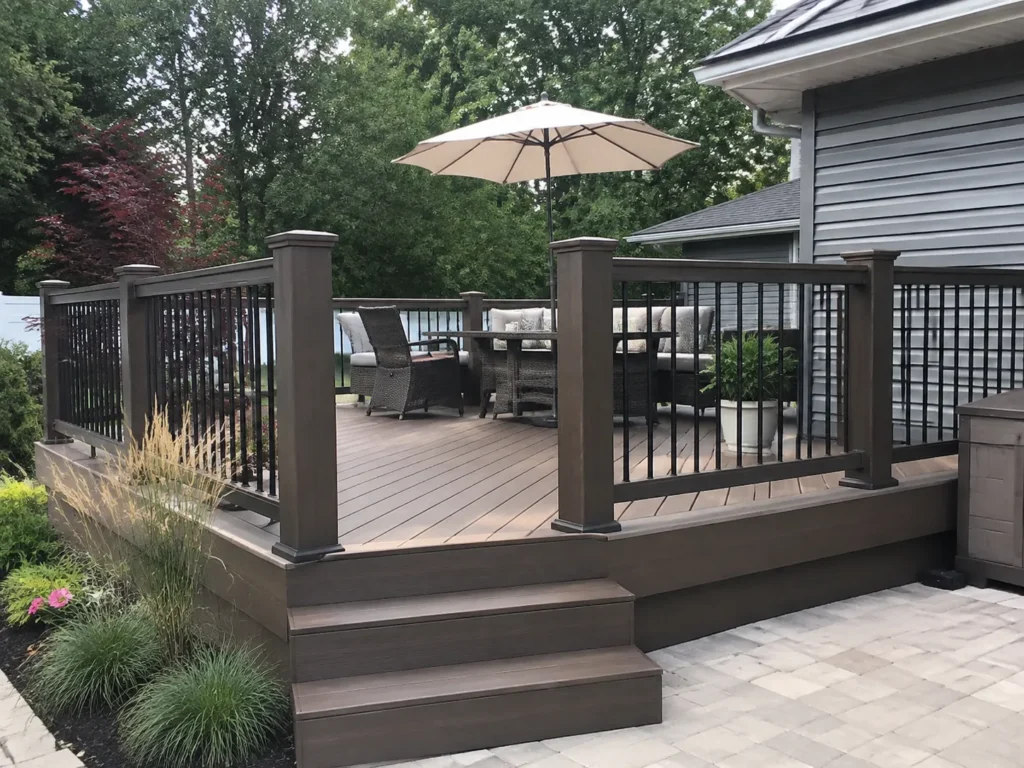
A new deck should look good, feel comfortable underfoot, and hold up through years of Canadian weather. That makes choosing between a composite deck and traditional wood more than a style decision. For Toronto homeowners, freeze-thaw cycles, summer heat, moisture, maintenance, and long-term value all deserve consideration.
The right material depends on how you use your outdoor space, how much maintenance you are willing to handle, your design preferences, and your long-term budget. This guide compares composite and wood decking so you can make a practical decision before starting your Toronto deck project.
Composite or Wood Deck?
A composite deck is usually the better choice for homeowners who prioritize low maintenance, consistent appearance, and long-term convenience. Wood decking can be preferable for homeowners who value natural character, easier customization, and a lower initial material cost. In Toronto, both can work well when properly designed, installed, ventilated, and maintained.
What Is a Composite Deck?
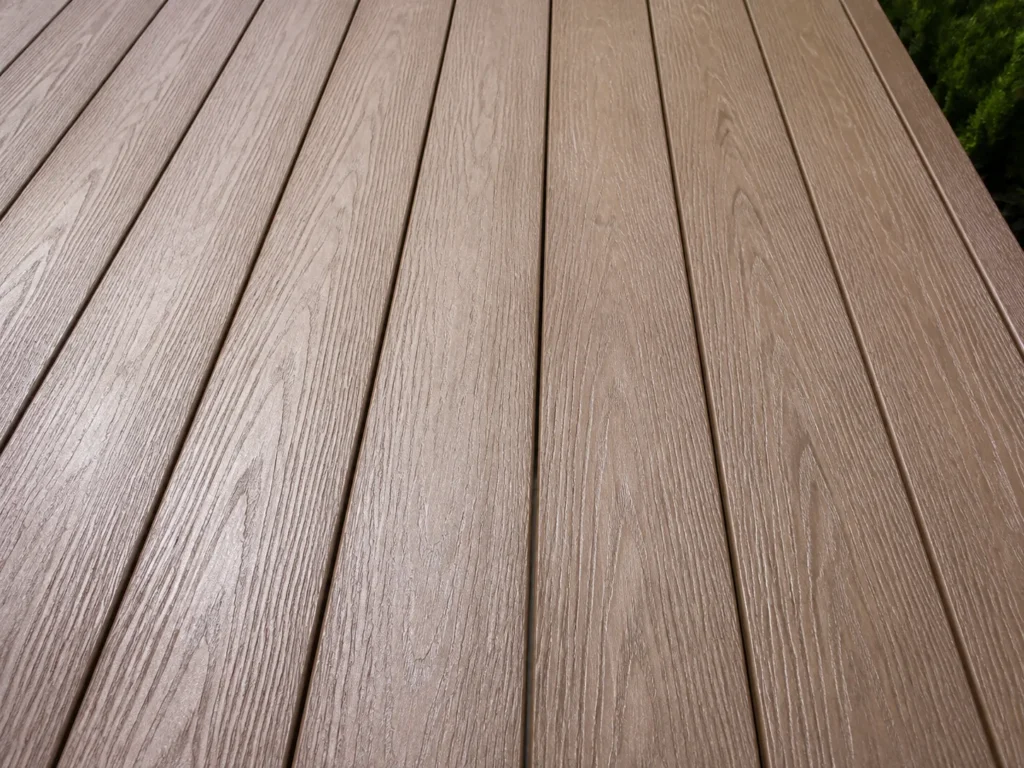
A composite deck is a decking system made primarily from a blend of materials such as wood fibres and recycled or virgin polymers. Unlike traditional wood boards, composite decking is manufactured to provide more consistent colour, dimensions, and surface characteristics.
Modern composite products are available in a wide variety of colours and textures, including designs intended to resemble natural hardwood.
For homeowners considering a composite deck, the biggest attraction is usually reduced routine maintenance.
Instead of regularly sanding, staining, or sealing the boards, homeowners typically focus on routine cleaning and following the manufacturer’s care recommendations.
However, composite does not mean maintenance-free. Dirt, leaves, spills, mildew, and other debris can still accumulate, particularly in shaded or poorly ventilated areas.
What Is a Wood Deck?
A wood deck uses natural lumber for the decking surface and structural components. Common decking choices include pressure-treated lumber and naturally durable species such as cedar.
A wood deck offers characteristics that manufactured decking cannot perfectly replicate. Natural grain, knots, colour variation, and the ability to sand and refinish the surface give wood a distinctive appearance.
The trade-off is ongoing maintenance.
A wood deck may require cleaning, staining, sealing, and periodic inspection to help protect it from moisture, weather exposure, surface deterioration, and other issues.
Composite Deck vs Wood Deck: Key Differences
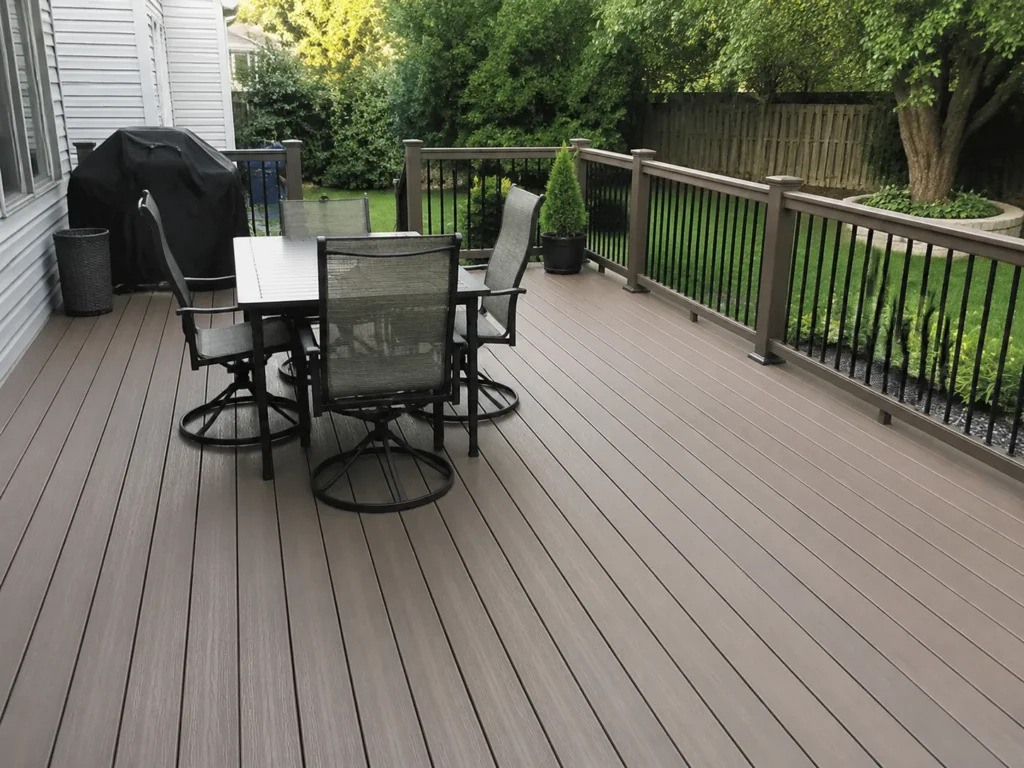
The most useful way to compare a composite deck with wood is to evaluate the entire ownership experience rather than looking only at the purchase price.
| Factor | Composite | Wood |
| Appearance | Consistent, manufactured styles | Natural grain and variation |
| Routine maintenance | Generally lower | Generally higher |
| Refinishing | Usually not required like wood | Periodic staining/sealing may be needed |
| Colour consistency | More predictable | Changes naturally over time |
| Customization | Good selection of colours and profiles | Highly customizable |
| Initial cost | Often higher | Often lower |
| Long-term maintenance | Typically lower | Typically higher |
| Feel | Manufactured surface | Natural wood feel |
| Repair | Individual boards can often be replaced | Boards can be repaired or replaced |
| Toronto climate | Designed products can perform well when properly installed | Performs well with proper maintenance |
The best choice depends on which compromises make sense for your household.
Why Composite Decking Works Well for Toronto
Toronto’s climate creates several challenges for outdoor structures. Decks experience rain, snow, humidity, UV exposure, temperature changes, and freeze-thaw conditions. Homeowners can review official Ontario Building Code requirements when planning a deck project.
A properly designed composite deck can be attractive for homeowners who do not want to spend every few years preparing the surface for another round of staining or sealing.
Lower Routine Maintenance
This is often the biggest advantage.
Homeowners who want to spend more time using their outdoor space and less time maintaining it may prefer composite.
Routine care generally involves:
- Sweeping debris
- Cleaning spills
- Washing the surface as appropriate
- Removing leaves and organic debris
- Keeping drainage areas clear
- Following manufacturer-specific cleaning instructions
Consistent Appearance
Composite boards are manufactured rather than grown. That makes colour and pattern more predictable across the project.
This can be particularly useful when you want a contemporary design with coordinated railing, lighting, furniture, and landscaping.
Design Flexibility
A modern composite deck can be designed with contrasting board colours, picture-frame borders, breaker boards, integrated lighting, and complementary railing systems.
That allows homeowners to create a more customized outdoor living space without relying solely on the natural variation of lumber.
Why Wood Decking Still Makes Sense
Choosing a composite deck does not mean wood is outdated. Wood remains a strong option for homeowners who value natural materials and are comfortable with ongoing maintenance.
Natural Appearance
For many homeowners, nothing completely replicates the character of real wood.
Cedar and other wood species provide natural grain and colour variation that can complement traditional homes, gardens, and landscaping.
Easier On-Site Modification
Wood can often be cut, shaped, drilled, and modified relatively easily during construction.
That flexibility can be useful for complicated layouts, unusual angles, custom details, and certain renovation projects.
Lower Initial Material Cost
Depending on the product, species, design, and market conditions, wood may have a lower upfront material cost than premium composite products.
However, homeowners should consider the total ownership equation rather than comparing material prices alone.
Composite vs Wood: Which Requires More Maintenance?
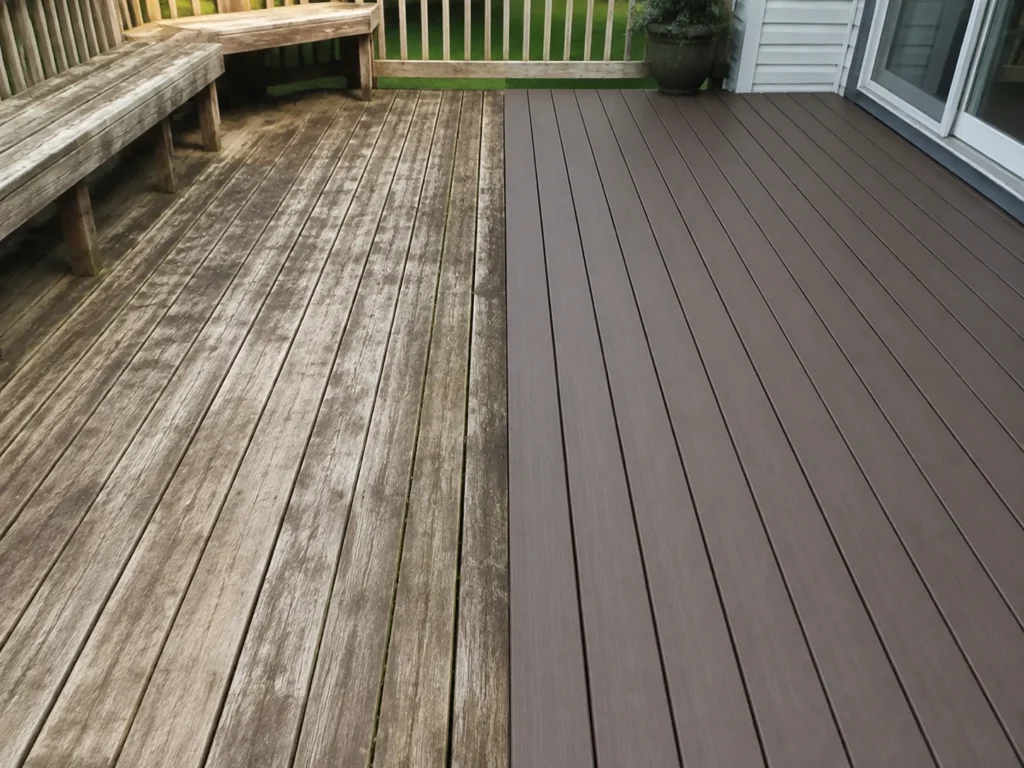
For most homeowners, maintenance is one of the clearest differences between a composite deck and wood.
Wood requires a protective maintenance cycle because it remains exposed to weather. Depending on the product and conditions, this may involve cleaning and periodically applying stain or protective finishes.
Composite generally eliminates much of that refinishing work, although it still needs regular cleaning.
A Simple Maintenance Comparison
Composite:
- Clean regularly
- Remove organic debris
- Address spills promptly
- Inspect fasteners and structural components
- Follow manufacturer care instructions
Wood:
- Clean regularly
- Inspect for damage
- Monitor moisture-related deterioration
- Sand when necessary
- Stain or seal as appropriate
- Replace damaged boards
- Inspect the structure
If your main priority is minimizing maintenance, composite usually has the advantage.
Is Composite More Expensive Than Wood?
A composite deck can have a higher upfront cost than some wood options. But the initial installation price does not tell the entire story.
Your overall project cost can depend on:
- Deck size
- Deck height
- Foundation requirements
- Framing material
- Decking product
- Railing
- Stairs
- Lighting
- Skirting
- Labour
- Site access
- Demolition
- Landscaping
- Permit or inspection requirements where applicable
Premium composite products can increase material costs, while a basic pressure-treated wood deck may offer a lower initial entry point.
The better financial question is:
How much will I spend to build, maintain, repair, and eventually replace this deck?
That is a more useful comparison than simply asking which board is cheaper today.
How Toronto Weather Affects Your Decision
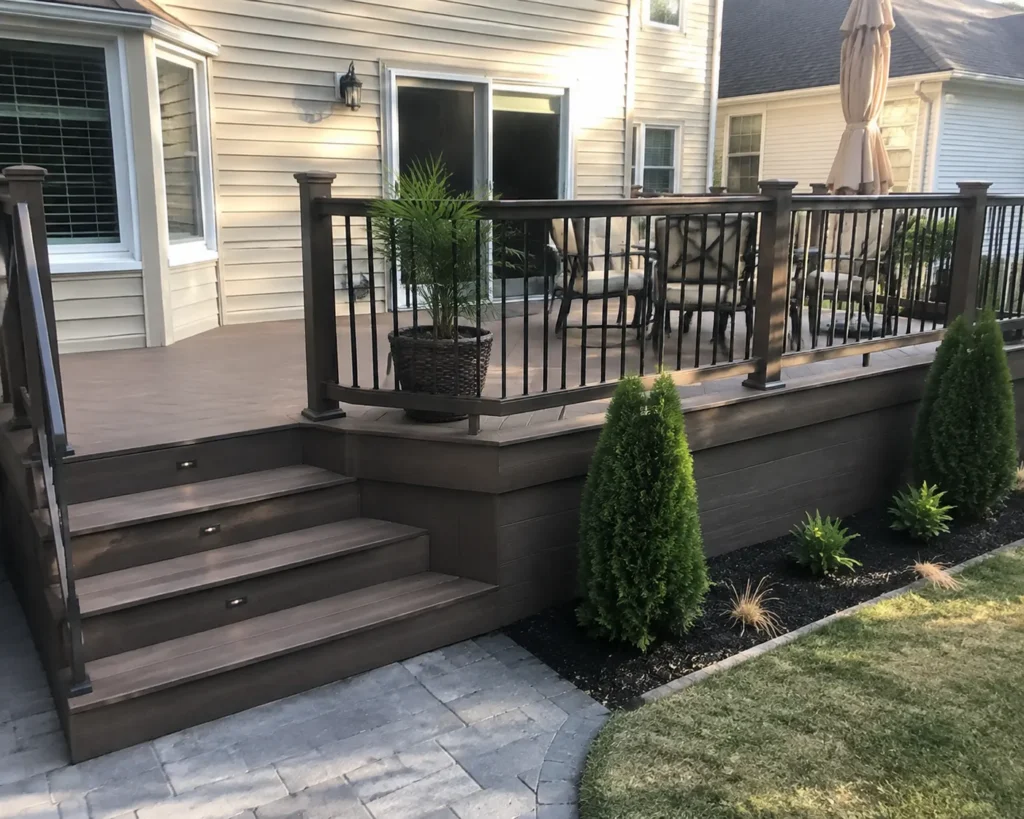
For a Toronto homeowner, climate should be part of the material decision.
A composite deck can handle outdoor exposure well when the product is appropriate for the application and installed according to the manufacturer’s specifications.
Wood can also perform successfully in Toronto, but moisture management and maintenance become especially important.
Important Installation Considerations
Regardless of material, your deck should have:
- Proper drainage
- Adequate ventilation
- Correct structural support
- Appropriate fasteners
- Proper board spacing
- Correct joist spacing
- Adequate flashing where required
- Suitable foundations
- Proper stair construction
- Correct railing installation
The best decking material cannot compensate for poor construction.
Choosing a Wood Deck Builder
If you prefer natural lumber, finding an experienced wood deck builder is just as important as selecting the right species.
Ask prospective builders:
- What wood species do you recommend for my project?
- How will you handle drainage?
- What framing material will you use?
- How will the deck be supported?
- How do you address Toronto’s freeze-thaw conditions?
- What maintenance should I expect?
- How will you handle stairs and railings?
- Can I see similar completed projects?
- What is included in the written estimate?
- Who handles permits when they are required?
A professional wood deck builder should be able to explain why a particular construction method is suitable for your property rather than simply recommending the material they use most often.
Composite Deck or Wood: Which Looks Better?
This is ultimately subjective.
A composite deck works particularly well with modern homes where homeowners want clean lines, consistent colours, and coordinated outdoor finishes.
Wood may be more appealing when you want:
- Natural grain
- Traditional character
- Rustic aesthetics
- A surface that can change colour through refinishing
- A highly natural connection with landscaping
The right question is not “Which material looks better?”
Ask:
Which material better fits the architecture of my home and the amount of maintenance I want to perform?
A Practical Example: Two Toronto Homeowners
Consider two hypothetical homeowners.
Homeowner A: The Low-Maintenance Family
They use their deck frequently for dining, entertaining, and relaxing. They have young children and a busy schedule. They would rather clean the deck occasionally than spend weekends staining it.
A composite deck may make more sense because convenience is a major priority.
Homeowner B: The Traditional Homeowner
They enjoy woodworking and outdoor maintenance. They prefer the appearance of natural lumber and do not mind periodic staining.
A wood deck may be the better fit.
Neither decision is universally right. The best material depends on the homeowner.
What About Composite Deck Repairs?
A composite deck can still be damaged.
Heavy impact, improper installation, structural movement, extreme conditions, or other events can damage individual boards or components.
One advantage of a properly designed system is that individual decking boards may be replaceable rather than requiring complete deck replacement.
However, repairs should follow the manufacturer’s recommendations. Different composite products have different construction, fastening systems, colours, and repair requirements.
Common Composite Deck Mistakes to Avoid
If you choose a composite deck, avoid assuming the material eliminates the need for good construction.
Mistake 1: Ignoring Drainage
Water should not be allowed to remain trapped around the deck structure.
Mistake 2: Choosing Only by Colour
A beautiful colour does not automatically mean the product suits your budget, traffic level, location, or maintenance expectations.
Mistake 3: Mixing Products Without Planning
Decking, fascia, railing, stairs, and lighting should be considered as one design.
Mistake 4: Ignoring Manufacturer Requirements
Installation requirements vary. Joist spacing, fasteners, ventilation, gapping, and cleaning instructions should be based on the selected product.
Mistake 5: Choosing the Cheapest Installer
A deck is a structural outdoor addition. Installation quality matters as much as the visible decking boards.
How to Plan Your Deck Project
Before contacting a contractor, prepare the following information:
- Approximate deck dimensions
- Photos of the existing property
- Desired deck height
- Intended use
- Preferred material
- Colour preferences
- Stair requirements
- Railing preferences
- Desired privacy features
- Lighting ideas
- Approximate budget
- Desired completion timeframe
Then ask for a written scope rather than relying on a verbal estimate.
For Toronto homeowners considering a composite deck, Everstruct can help turn those initial ideas into a practical outdoor construction plan. Explore Everstruct to learn more about deck construction and related outdoor projects.
A Composite Deck Buying Checklist
Before selecting a composite deck, ask:
- What is the product’s warranty?
- What colours and profiles are available?
- What maintenance does the manufacturer recommend?
- What installation system is required?
- What joist spacing is specified?
- How should the boards be cleaned?
- How does the product handle temperature changes?
- Are matching fascia and railing products available?
- Can damaged boards be replaced?
- What is included in the installation quote?
A good contractor should be comfortable discussing these questions before you commit.
How Everstruct Can Help With Your Toronto Deck Project
Choosing between materials is only the beginning. Your finished outdoor space also depends on design, structural planning, site conditions, installation quality, stairs, railings, drainage, and finishing details.
Everstruct works with homeowners and property owners in Toronto to plan and build outdoor structures with practical construction considerations in mind. For more outdoor construction ideas and guidance, explore the Everstruct blog.
If you are deciding whether a composite deck fits your property, discuss your goals with a qualified deck professional before purchasing materials. Bring your preferred style, approximate dimensions, photos, and budget to the conversation.
That allows the builder to evaluate the complete project instead of quoting the decking material in isolation.
Frequently Asked Questions
Is a Composite Deck Better Than a Wood Deck?
A composite deck is generally better for homeowners who prioritize low routine maintenance and consistent appearance. Wood may be preferable for homeowners who prioritize natural character, customization, and potentially lower initial material costs.
How Long Does a Composite Deck Last?
The lifespan of a composite deck depends on the product, installation quality, exposure, maintenance, and manufacturer specifications. Homeowners should review the specific product warranty and care requirements rather than relying on one universal lifespan estimate.
Is Composite Decking Good for Toronto Winters?
A properly selected and installed composite deck can be suitable for Toronto’s climate. Proper drainage, ventilation, structural design, fasteners, spacing, and compliance with manufacturer requirements are essential.
Is Composite Decking Maintenance-Free?
No. A composite deck generally requires less maintenance than wood, but it still needs routine cleaning and inspection. Homeowners should follow the manufacturer’s specific cleaning and care instructions.
Should I Hire a Wood Deck Builder or Composite Deck Contractor?
Choose a contractor based on relevant experience with your preferred material and the complete project. A qualified wood deck builder should understand wood construction, while a composite installation specialist should understand the selected composite system and its installation requirements.
Does Composite Decking Cost More Than Wood?
It can. Initial pricing varies significantly based on the decking product, deck size, structure, labour, railings, stairs, and project complexity. Compare the complete project cost and expected maintenance rather than material price alone.
Which Decking Material Is Easier to Clean?
Composite decking is generally easier to maintain because it typically does not require regular sanding, staining, or sealing like wood. Routine composite deck care usually involves sweeping debris, cleaning spills, and washing the surface according to the manufacturer’s recommendations.
Does Composite Decking Get Hot in Summer?
Composite decking can become warm when exposed to direct sunlight, particularly with darker colours. The surface temperature can vary depending on the product, colour, sun exposure, and surrounding conditions. Homeowners should consider these factors when choosing a composite deck for areas used frequently during hot weather.
Can I Install a Composite Deck Over an Existing Wood Deck?
It depends on the condition and design of the existing structure. A contractor should inspect the framing, joists, foundations, drainage, and structural condition before determining whether the existing deck can support a new composite surface. In some cases, structural modifications or replacement may be necessary.
Which Decking Option Is Better for a Busy Household?
A composite deck can be a practical choice for busy households that want to spend less time on routine maintenance. Wood can also work well, but it generally requires more ongoing care, including cleaning, inspection, and periodic staining or sealing. The better option depends on how much maintenance the homeowner is willing to perform.
Choose the Deck That Fits Your Life
The best decking material is not necessarily the most expensive, the newest, or the most popular. It is the one that matches your home’s design, your outdoor lifestyle, your maintenance expectations, and your long-term priorities.
A composite deck is a strong option for Toronto homeowners who want a durable-looking, low-maintenance outdoor surface with consistent design options. Wood remains an excellent choice for homeowners who prefer natural character and are comfortable with regular maintenance.
Before making a decision, compare the full project: structure, decking, stairs, railings, drainage, installation, maintenance, and long-term ownership.
If you are planning a new deck in Toronto, contact Everstruct to discuss your project requirements and explore a deck solution designed around your property and lifestyle.