
Best Privacy Fence Ideas for Luxury Homes in Toronto
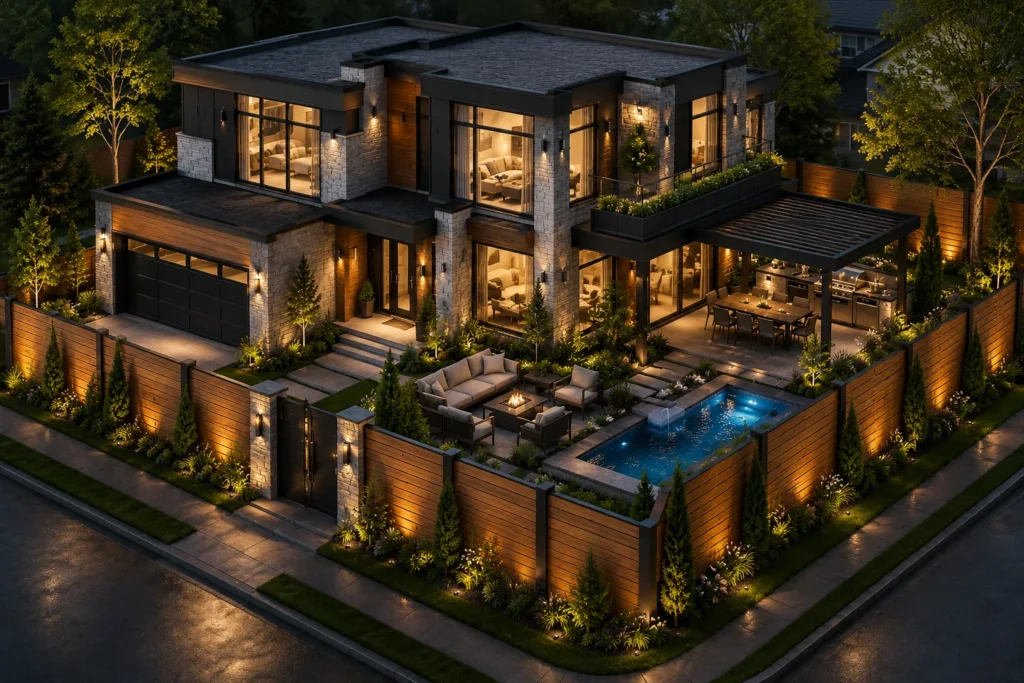
Luxury homes deserve more than a basic boundary. The right privacy fence should protect outdoor living areas, complement the architecture, manage sightlines, and look intentional from both sides. For Toronto homeowners, the best choice also has to account for lot size, weather exposure, grading, maintenance, and local fence requirements.
The best privacy fence ideas for luxury homes combine strong screening with refined materials and architectural detailing. Popular options include horizontal wood slats, premium cedar panels, modern composite fencing, board-and-batten designs, and mixed-material fences. The ideal choice depends on privacy needs, home style, maintenance expectations, budget, and Toronto property rules.
Why Privacy Fence Design Matters for a Luxury Home
A well-designed privacy fence does more than block a neighbour’s view. A well-designed privacy fence establishes the visual edge of your property and can make a backyard feel like a private outdoor room.
A well-designed privacy fence can:
- Create a more secluded patio, pool, or garden.
- Reduce unwanted views into bedrooms and living spaces.
- Define entertaining areas without making the yard feel closed in, while creating a more cohesive outdoor living space for dining, relaxing, and entertaining.
- Frame landscaping and architectural features.
- Improve the finished appearance of a newly renovated property.
- Add a consistent visual language between the house and landscape.
8 Best Privacy Fence Ideas for Luxury Homes
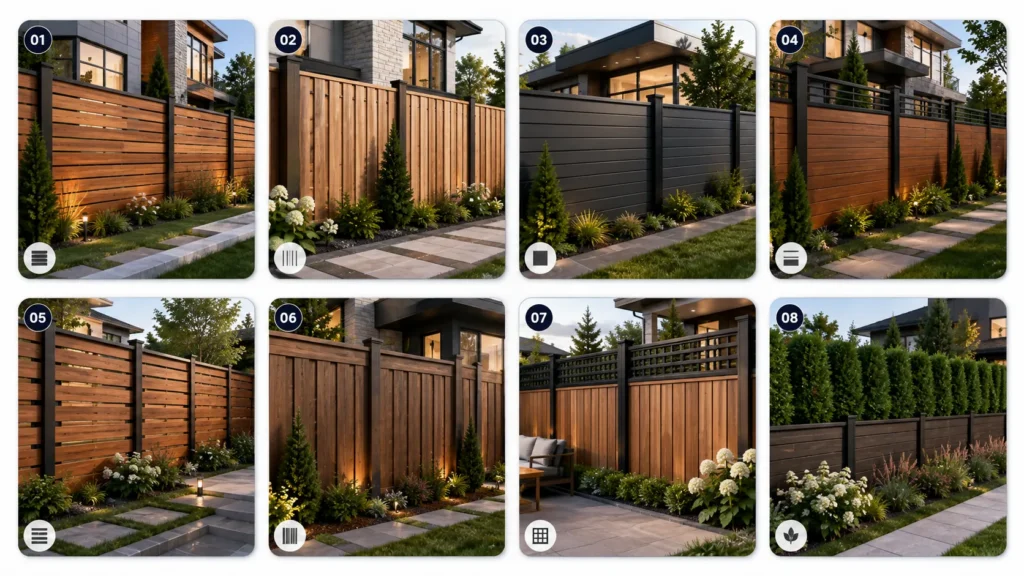
1. Horizontal Cedar Slat Fence
A horizontal cedar privacy fence is one of the strongest choices for contemporary Toronto homes. The clean lines echo modern siding, architectural panels, and minimalist landscaping.
Use narrow or medium-width boards for a refined appearance, with consistent spacing and concealed or carefully aligned fasteners. Cedar also brings natural warmth to homes dominated by stone, concrete, glass, or dark cladding.
Best for: Modern, transitional, and Scandinavian-inspired homes.
Pros:
- Warm natural appearance
- Strong architectural character
- Easy to customize
Cons:
- Requires periodic maintenance
- Wood can change colour as it weathers
2. Board-and-Batten Privacy Fence
For a more substantial look, a board-and-batten privacy fence creates a layered façade rather than a simple row of boards. Vertical battens can conceal seams and give the fence a custom-built appearance.
This approach works particularly well when the home’s exterior already uses vertical architectural elements.
Best for: Traditional, transitional, and custom-built luxury homes.
3. Modern Composite Fence
Composite panels can deliver a clean, consistent look with less routine upkeep than many natural wood systems. They are especially useful when a homeowner wants a contemporary appearance without regular staining.
A premium privacy fence made from composite materials should still be evaluated for colour stability, structural support, fastening systems, and manufacturer specifications rather than judged by appearance alone.
Best for: Low-maintenance modern landscapes.
4. Mixed Wood and Metal Fence
Combining wood privacy panels with steel or aluminum posts creates a crisp, high-end aesthetic. Dark metal frames can visually anchor warm timber boards and coordinate with black windows, doors, railings, and exterior lighting.
This is also a useful design strategy when a completely solid fence would feel too heavy. Strategic openings or changes in panel rhythm can create visual interest without sacrificing the main privacy function.
Best for: Contemporary and urban luxury properties.
5. Shadowbox Privacy Fence
A shadowbox design uses alternating boards on opposite sides of the rails. From many angles, it provides a more finished appearance than a conventional fence where the structural framing is clearly visible on one side.
It can be a practical choice for homeowners who care about how the fence looks from the neighbouring side as well as their own yard.
Best for: Properties where both sides of the fence should look considered.
6. Board-on-Board Fence
A board-on-board privacy fence overlaps vertical boards so there are fewer direct sightlines through the fence. It creates a substantial, uniform screen and can be customized with different caps, posts, trims, and stains.
This style is particularly useful where privacy is the primary objective, such as around a rear patio or overlooked garden.
Best for: Maximum visual screening.
7. Decorative Privacy Fence With Lattice or Slatted Top
A solid lower section paired with a decorative upper section can balance privacy and openness. The top treatment may use narrow slats, lattice, or another architectural pattern.
This is useful when you want to soften the visual mass of a tall privacy fence while maintaining a defined boundary.
Best for: Gardens, entertaining areas, and traditional homes.
8. Privacy Fence With Integrated Landscaping
Sometimes the most luxurious result comes from combining fencing with plants rather than relying on a solid wall alone.
Evergreen shrubs, ornamental grasses, climbing plants, and carefully positioned trees can soften a privacy fence and help it blend into the landscape. The fence provides the structural screen while planting adds depth, texture, and seasonal character.
Best for: Large yards, gardens, and landscape-focused properties.
How to Choose the Right Fence for Privacy
Choosing a privacy fence should start with the problem you are trying to solve, not with a material catalogue.
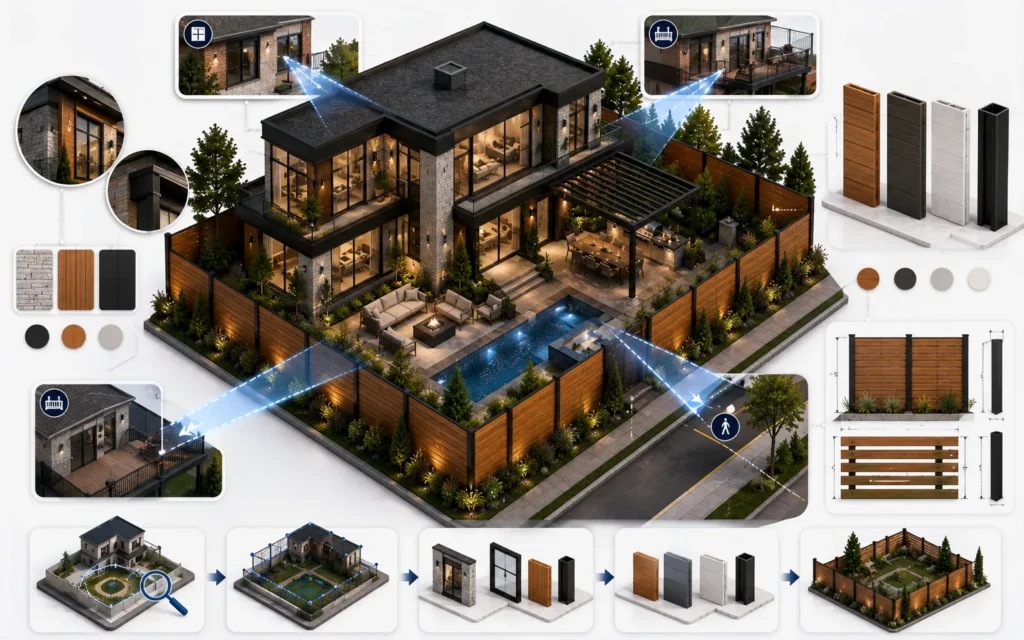
Step 1: Identify the Sightline Problem
Stand in the yard and identify exactly where privacy is missing.
Look toward:
- Neighbouring windows
- Sidewalks and streets
- Adjacent decks
- Elevated properties
- Outdoor seating areas
- Pool and spa zones
You may discover that complete enclosure is unnecessary. A carefully positioned privacy fence can block a specific sightline while preserving light and openness elsewhere.
Step 2: Match the Fence to the Architecture
A luxury fence should feel like part of the property rather than an afterthought. Thoughtful design services can help coordinate the fence with the home’s architecture, materials, proportions, and surrounding landscape.
Consider:
- Rooflines
- Window frames
- Exterior cladding
- Stone and brick colours
- Outdoor furniture
- Landscape architecture
- Existing gates and railings
For example, a home with black-framed windows may look cohesive with dark metal posts, while a stone-and-wood exterior may benefit from warm cedar.
Step 3: Choose Materials Based on Maintenance
Wood offers warmth and design flexibility but requires ongoing care. Composite materials can reduce routine maintenance, while metal components can provide a modern structural accent.
Ask how the fence will look after five or ten years, not only on installation day.
Step 4: Plan for Toronto Weather
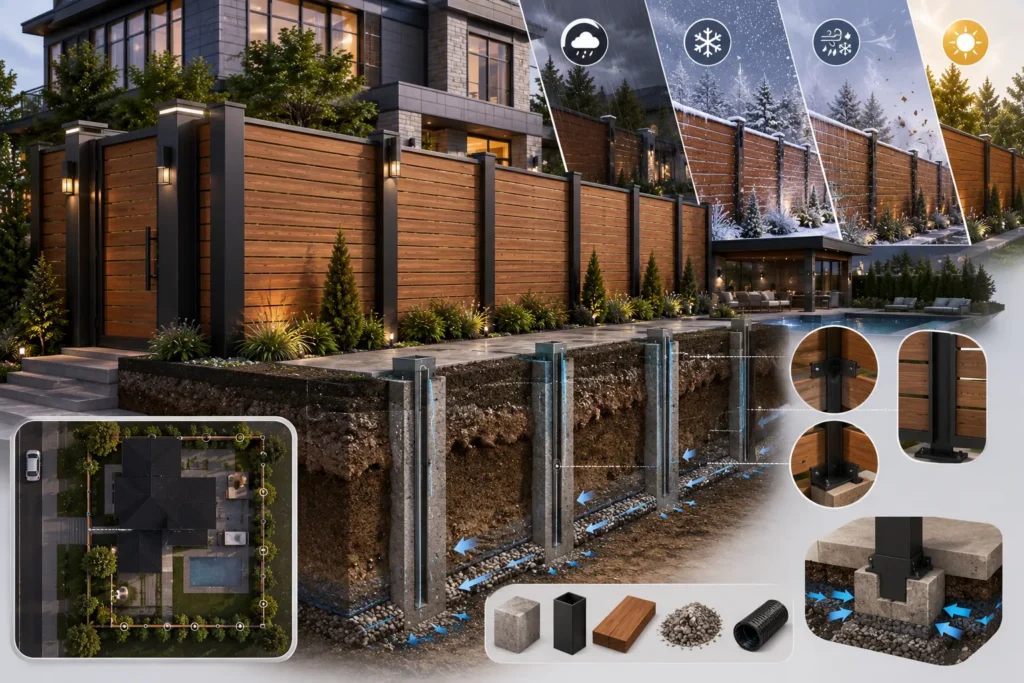
Toronto fences experience freezing temperatures, snow, rain, humidity, and seasonal movement. Good construction and engineering therefore matter as much as material selection, particularly when the fence involves complex grading, structural elements, or custom construction.
Pay attention to:
- Post depth and stability
- Drainage around posts
- Ground conditions
- Fastener quality
- Panel movement
- Water exposure
- Snow and ice accumulation
A beautiful privacy fence with weak posts or poor drainage will not remain beautiful for long.
Step 5: Check Local Requirements Before Construction
Toronto’s Fence Bylaw sets requirements based on factors such as fence location, property type, and construction. The City states that fence height rules vary by location, and its current bylaw includes different maximum heights for front yards and other areas. For example, some residential fences can be up to 2.0 metres depending on their location, while a fence within 2.4 metres of a lot line abutting a public highway in a front yard has a lower maximum. Always verify Toronto’s fence requirements for your property’s exact situation before finalizing a design.
If the fence is part of a swimming pool enclosure, additional rules and permits apply. The City requires pool enclosures to fully surround the pool area and specifies minimum heights and construction requirements.
Privacy Fence vs. Other Screening Options
A privacy fence is not always the only answer. Compare the options before committing to a full perimeter installation.
| Option | Privacy | Maintenance | Design flexibility | Best use |
| Wood privacy fence | High | Moderate | High | Most residential yards |
| Composite fence | High | Low to moderate | High | Low-maintenance modern homes |
| Metal screen | Medium to high | Low | High | Contemporary properties |
| Hedge | Medium | High | High | Natural landscape design |
| Pergola/screen wall | Targeted | Moderate | High | Patios and entertaining zones |
The best luxury solution may combine two or more screening approaches. For example, a solid privacy fence can handle the property boundary while a planted screen adds softness near a patio.
What Makes a Privacy Fence Look Expensive?
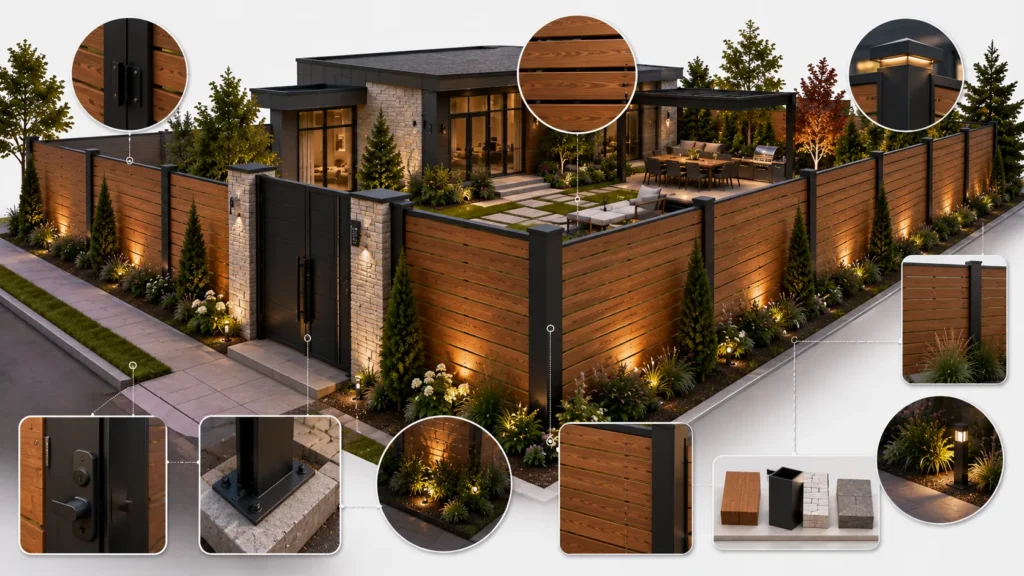
Premium appearance usually comes from proportion and detailing rather than simply choosing the most expensive material.
Look for:
- Consistent board spacing
- Straight, well-aligned lines
- Clean transitions at corners
- Carefully designed gates
- Proportional post sizes
- High-quality hardware
- A coordinated stain or finish
- Concealed or visually organized fasteners
- Integrated lighting where appropriate
- Thoughtful transitions into landscaping
For additional inspiration, explore Everstruct’s gallery to see how design, materials, and construction details can work together across residential projects.
Designing Gates as Part of the Fence
A gate is often the most noticeable moving component of a privacy fence, so it deserves the same design attention as the panels.
For a luxury property, consider:
- Matching gate and fence materials
- Oversized or architectural gate proportions where appropriate
- Durable hinges and latches
- Secure locking hardware
- Automated access where useful
- A pedestrian gate separate from a driveway gate
When to Work With a Fence Contractor
DIY installation can make sense for simple projects, but complex luxury properties often benefit from professional planning and construction expertise.
For Toronto homeowners, professional coordination can be especially valuable when fencing connects with landscaping, decks, retaining walls, outdoor kitchens, pools, or other construction work.
A Practical Luxury Fence Brief
Before requesting quotes, prepare a simple project brief containing:
- Property location
- Approximate fence length
- Desired privacy level
- Preferred style
- Preferred materials
- Gate requirements
- Existing landscaping
- Photos of the home exterior
- Any known grading or drainage issues
- Target project timing
This gives a fence contractor enough context to produce a more meaningful proposal instead of a generic linear-foot estimate.
Common Fence Mistakes to Avoid
Choosing Height Before Solving Sightlines
More height does not automatically mean better privacy. Identify the viewing angle first.
Ignoring the Neighbour-Facing Side
If your fence borders another property, both sides can affect the overall appearance of the neighbourhood. A finished back side can be worth the extra design consideration.
Underestimating Gates
Heavy or wide gates need appropriate structural support. A beautiful gate that sags or drags will quickly undermine the quality of the entire installation.
Mixing Too Many Materials
Luxury design usually benefits from restraint. Pick a primary fence material and one or two complementary accents.
Forgetting Maintenance
Ask what cleaning, staining, sealing, painting, or component replacement will be required over time.
Skipping Local Verification
Fence rules can depend on location and property conditions. Toronto’s official guidance should be checked before construction, especially for unusual layouts or pool enclosures.
A Simple Luxury Privacy Fence Decision Framework
Use these questions to narrow your choice:
Need maximum visual privacy? Choose a board-on-board or board-and-batten design.
Want a modern architectural look? Consider horizontal cedar or a wood-and-metal combination.
Want less routine maintenance? Compare premium composite systems with other low-maintenance materials.
Want a softer garden aesthetic? Combine a privacy fence with layered planting.
Have a pool? Design the fence around the applicable pool enclosure requirements first.
Have a sloped or complicated property? Get a site-specific assessment before selecting the final system.
If you are planning a privacy fence in Toronto or the GTA, start with the property rather than a stock fence package. Everstruct operates across Toronto and the GTA on residential and outdoor projects, with an emphasis on quality, clear communication, and long-term performance. A site-specific consultation can help you evaluate layout, materials, privacy goals, and how the fence should integrate with the rest of your outdoor space.
FAQ
1. What is the best material for a luxury privacy fence?
There is no single best material. Cedar is strong for natural warmth and customization, composite can suit lower-maintenance projects, and wood-metal combinations work well for contemporary architecture. The right choice depends on design, maintenance, budget, and site conditions.
2. How high can a privacy fence be in Toronto?
Toronto’s maximum fence height depends on where the fence is located and the property type. Some residential fence locations permit up to 2.0 metres, while other locations have different limits. Check the current City of Toronto Fence Bylaw for your exact property before construction.
3. Is a privacy fence better than a hedge?
A fence provides immediate, predictable screening and establishes a clear boundary. A hedge can create a softer appearance but generally needs more ongoing landscape maintenance and time to mature. Combining both can produce an especially polished result.
4. What is the most modern privacy fence style?
Horizontal wood slats, minimalist composite panels, and wood paired with dark metal posts are common modern approaches. The best result comes from matching the fence proportions and materials to the architecture.
5. Should a privacy fence have a gate?
Most properties benefit from at least one properly planned access gate. The gate should be structurally supported, proportionate to the fence, and selected with security and daily use in mind.
6. Do I need a permit for a privacy fence in Toronto?
The City of Toronto states that ordinary private-property fences generally do not require a permit, but pool enclosure fences have specific permit requirements. Other site conditions can also affect approvals, so verify the current municipal rules before construction.
7. What privacy fence style adds the most curb appeal?
A privacy fence that complements the home’s architecture typically adds the most curb appeal. Horizontal cedar slats, refined board-and-batten designs, and wood paired with dark metal accents are popular for luxury properties because they create clean lines without looking overly utilitarian.
8. How long does a privacy fence typically last?
The lifespan of a privacy fence depends on the material, installation quality, drainage, weather exposure, and maintenance. Properly maintained wood fencing can provide many years of service, while composite and metal systems may offer longer-lasting performance with different maintenance requirements.
9. Can a privacy fence increase a home’s value?
A well-designed privacy fence can improve a property’s appearance, usability, and outdoor privacy, which may make the home more appealing to potential buyers. However, a fence should be viewed primarily as an improvement to functionality and outdoor living rather than a guaranteed increase in resale value.
10. How do I choose the right fence contractor in Toronto?
Look for a fence contractor with relevant residential experience, clear project specifications, quality materials, professional installation practices, and transparent pricing. Ask about references, warranties, drainage and post installation, expected maintenance, and how the contractor will handle Toronto’s local fence requirements before signing a contract. You can also review Everstruct’s client reviews when evaluating the company and its approach to residential projects.
Conclusion
The best privacy fence for a luxury Toronto home is not simply the tallest or most expensive option. It is the system that solves the property’s specific privacy problem while complementing the architecture, landscape, maintenance expectations, and local requirements.
Horizontal cedar, board-and-batten, board-on-board, composite, mixed wood and metal, and fence-plus-landscape designs can all work exceptionally well when they are proportioned and installed correctly. The strongest results come from treating the fence as part of the home’s overall exterior design rather than as a last-minute boundary. For more ideas on residential construction and outdoor projects, explore the Everstruct blog for additional planning and design guidance.
If you are ready to turn a privacy goal into a durable, architectural outdoor feature, consult a qualified fence contractor and develop the design around your actual property. For Toronto and GTA homeowners, Everstruct can help you plan a solution that balances privacy, appearance, functionality, and long-term performance. Contact Everstruct to discuss your property, privacy goals, and potential fencing solution.