
Outdoor Fireplace vs Fire Pit – Which Outdoor Fire Feature Is Better for Your Toronto Backyard?
Replace
When planning a backyard renovation in Toronto, few additions create as much atmosphere as an outdoor fire feature. A well-planned backyard renovation can combine outdoor structures, landscaping, and entertainment areas into one cohesive space. But choosing between an outdoor fireplace and a fire pit is more complicated than deciding which one looks better. Your available space, seating arrangement, maintenance expectations, fuel type, design goals, and local fire regulations all matter.
For most homeowners, the right choice comes down to how you want to use the backyard. An outdoor fire feature designed around conversation and flexible seating may favour a fire pit, while a built-in fireplace can become a dramatic architectural focal point.
This guide compares the two options, explains the practical differences, and provides a decision framework for choosing the right outdoor fire feature for a Toronto-area backyard.
Outdoor Fireplace or Fire Pit?
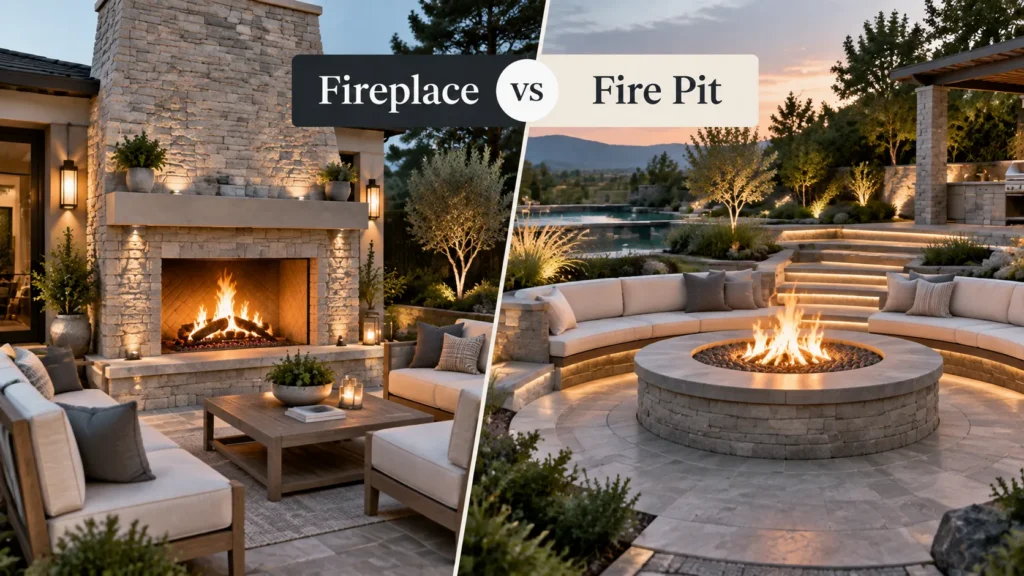
An outdoor fire feature can be either a fireplace or fire pit, but each works best for a different purpose. Fire pits generally provide a more open, social experience with seating arranged around the flame. Outdoor fireplaces create a vertical architectural focal point and can visually anchor a patio or covered entertaining area. For Toronto homeowners, fuel type and local regulations should also be considered before installation.
What Is an Outdoor Fire Feature?
An outdoor fire feature is a designed element that introduces controlled fire into an exterior living space. Common examples include:
- Gas fire pits
- Wood-burning fire pits
- Built-in outdoor fireplaces
- Fire bowls
- Linear fire tables
- Outdoor chimineas
- Custom masonry fireplaces
- Gas-powered architectural fire installations
Unlike a temporary portable heater, an outdoor fire feature is typically incorporated into the overall landscape or backyard design, often alongside professionally planned patio construction and outdoor gathering areas.
That distinction matters.
A good installation should not look like an appliance that was placed in the yard as an afterthought. It should complement the patio, landscaping, seating, pathways, lighting, privacy elements, and architecture of the home.
Outdoor Fireplace vs Fire Pit: The Main Difference
The simplest distinction is orientation.
A fire pit creates a horizontal gathering point. People generally sit around it, creating a 360-degree social zone.
An outdoor fireplace creates a vertical focal point. Seating usually faces the fireplace, making it more similar to an exterior living-room wall.
That difference affects everything from furniture placement to sightlines.
| Factor | Outdoor Fireplace | Fire Pit |
| Primary role | Architectural focal point | Social gathering point |
| Seating | Mostly facing the fire | Usually surrounds the fire |
| Visual impact | High | Moderate to high |
| Space efficiency | Can work well along an edge | Needs circulation around it |
| Design style | Architectural, traditional or modern | Casual, modern or landscape-focused |
| Installation complexity | Generally higher | Usually simpler |
| Best for | Defined outdoor rooms | Flexible entertaining |
| Heat experience | Directional | More evenly experienced around the centre |
| Backyard flexibility | More permanent | Often more adaptable |
The best outdoor fire feature is therefore the one that fits the way your household actually uses the backyard.
1. Outdoor Fireplace: Best for Architectural Impact
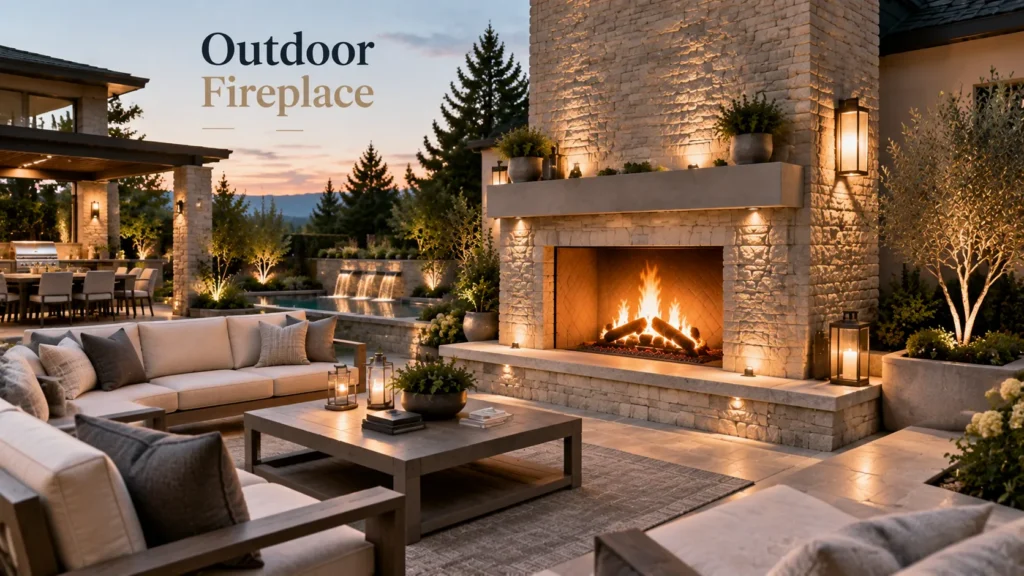
An outdoor fireplace can transform an ordinary patio into a defined outdoor room.
Because it has vertical mass, an outdoor fire feature in fireplace form can visually connect the ground plane to the surrounding architecture. It can also provide a strong backdrop for seating, televisions, artwork, lighting, or landscaping.
Benefits of an Outdoor Fireplace
Strong visual focal point
A fireplace naturally attracts attention and can become the centrepiece of the backyard.
Defined seating area
Instead of asking guests to determine where they should sit, the fireplace establishes an obvious orientation.
Architectural integration
A custom fireplace can be designed to complement the home’s materials, colours, proportions, and architectural character.
Potential privacy benefits
Depending on the design and placement, a fireplace wall can help define an outdoor room or create separation between areas of the property.
Potential Drawbacks
An outdoor fireplace is generally more permanent than a portable fire pit.
It may also require more planning because the structure, clearances, materials, fuel supply, ventilation, and surrounding construction all need to work together.
For that reason, a fireplace is best considered as part of a broader backyard renovation rather than as a standalone purchase.
2. Fire Pit: Best for Social Gatherings
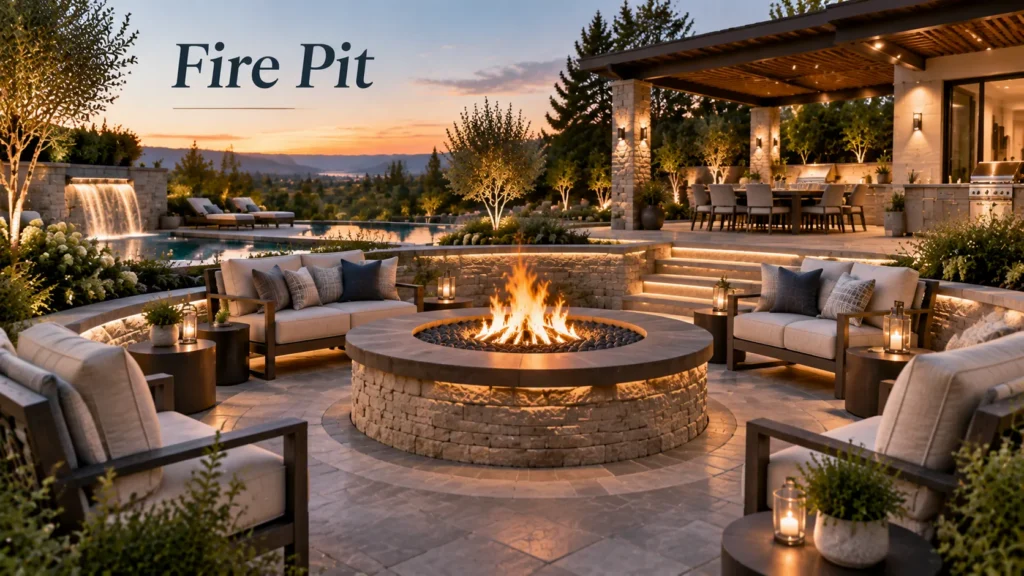
If your priority is conversation, a fire pit can be difficult to beat.
A well-positioned outdoor fire feature in fire-pit form creates a natural circle of interaction. Guests can face each other while enjoying the fire rather than sitting in a row facing a wall.
This makes fire pits particularly appealing for:
- Family gatherings
- Evening entertaining
- Casual conversations
- Smaller patios
- Contemporary backyard designs
- Flexible seating arrangements
Benefits of a Fire Pit
Social layout
The central flame encourages people to gather around one another.
Design flexibility
Fire pits can be round, square, rectangular, built-in, freestanding, or integrated into custom seating.
Contemporary appearance
Linear gas installations and minimalist fire tables can work particularly well with modern landscape architecture.
Easy integration
A fire pit can often be incorporated into an existing patio or backyard layout more easily than a large masonry structure.
Potential Drawbacks
A fire pit requires careful planning around circulation.
You need sufficient space between the flame and furniture, structures, landscaping, and other combustible materials. The pit should also be positioned so smoke, heat, and traffic patterns do not create problems.
A beautiful outdoor fire feature can quickly become impractical if people constantly have to walk around it or move chairs to avoid smoke.
Which Outdoor Fire Feature Is Better for a Toronto Backyard?
There is no universal winner.
Instead, evaluate five factors.
1. How Do You Entertain?
If you regularly host groups where conversation is the main activity, a fire pit may be the better choice.
If you prefer a structured outdoor lounge with sofas facing a focal point, consider a fireplace.
2. How Much Space Do You Have?
Small or irregular yards require particularly careful planning.
A large fireplace can consume valuable wall space, while a fire pit needs enough clearance around its perimeter for comfortable seating and movement.
The right outdoor fire feature should improve the usable space rather than simply occupy it.
3. What Is Your Backyard Style?
For a traditional Toronto home, a masonry fireplace may complement brick, stone, or classic architectural details.
For a contemporary property, a minimalist fire table or linear gas fireplace may create a cleaner visual relationship.
Think of the outdoor fire feature as part of the architecture not an isolated product.
4. Do You Want Wood or Gas?
Fuel choice significantly affects the experience.
Wood-burning systems provide the traditional smell, sound, flame behaviour, and ambience many homeowners associate with a fire.
Gas systems generally provide more convenient ignition and control and can fit neatly into contemporary outdoor designs.
However, fuel selection should never be based solely on aesthetics. Installation requirements, appliance certification, fuel connections, maintenance, and local regulations must also be considered.
5. What Are the Local Fire Rules?
This is especially important in Toronto.
The City of Toronto states that open-air burning generally requires authorization. Its guidance specifically addresses fire pits and outdoor fireplaces. However, the city also identifies an exception for compliant gas fire pits that are approved for outdoor use, used outdoors, not used for cooking, operated safely away from combustible materials, supervised, and used according to manufacturer instructions.
That means you should not assume that buying a commercially available outdoor fire feature automatically means it can legally be used in your backyard.
Ontario also advises residents to check municipal requirements before having an outdoor fire because local rules can add requirements beyond provincial regulations.
Always verify current requirements with the City of Toronto and the applicable fire authority before finalizing your design.
Designing the Backyard Around Your Fire Feature
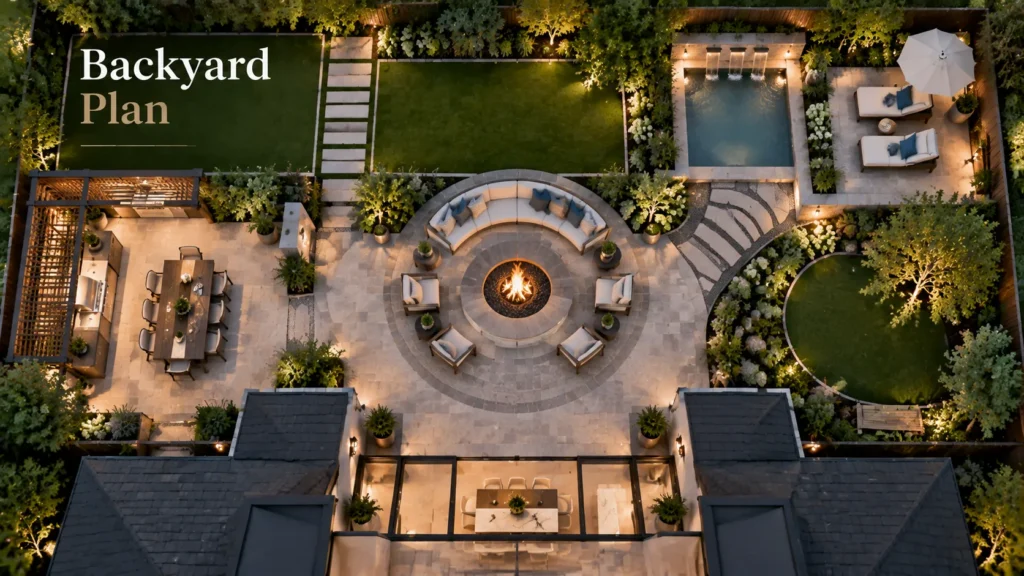
The biggest design mistake is selecting the fire element first and trying to make everything else fit afterward.
A better approach is to design the entire outdoor living zone together.
Start With the Seating Plan
Determine where people will sit before deciding where the fire goes.
Ask:
- How many people should the space accommodate?
- Do you want dining and lounging zones?
- Where will guests enter?
- What areas need unobstructed circulation?
- Where are the best views?
- Will smoke or heat affect nearby seating?
Once these questions are answered, the ideal outdoor fire feature location becomes much easier to identify.
Think About Sightlines
A fireplace works best when it can be seen from the primary seating area.
A fire pit should have good visibility without becoming an obstacle between the home and other backyard zones.
Coordinate Materials
Your fire element should relate visually to the rest of the property.
Possible material combinations include:
- Natural stone
- Brick
- Concrete
- Porcelain
- Steel
- Large-format pavers
- Complementary masonry finishes
The objective is visual continuity.
A Practical Decision Framework
Use this simple scoring method before committing to an outdoor fire feature.
Choose a fire pit if most of these statements are true:
- You prioritise conversation.
- You want seating around the flame.
- Your backyard design is informal or contemporary.
- You prefer a flexible entertaining area.
- You do not need a tall architectural focal point.
Choose an outdoor fireplace if most of these statements are true:
- You want a strong visual centrepiece.
- Your seating naturally faces one direction.
- You are creating a defined outdoor room.
- Architectural integration is important.
- You want the fire installation to feel permanent and substantial.
If you are somewhere in the middle, consider a custom solution such as a linear gas installation, fire table, or integrated fireplace-and-seating arrangement.
The Most Common Design Mistakes
Even an attractive outdoor fire feature can underperform when the surrounding design is poorly planned.
Mistake 1: Choosing Appearance Over Function
A dramatic fireplace may look impressive in a rendering but become inconvenient if it blocks circulation or does not work with your furniture.
Mistake 2: Ignoring Scale
A tiny fire pit can disappear in a large backyard. Conversely, an oversized fireplace can dominate a compact patio.
Mistake 3: Forgetting Wind
Toronto weather can make wind direction an important consideration. Smoke and heat should be evaluated in relation to prevailing conditions, neighbouring properties, doors, windows, and seating.
Mistake 4: Treating Regulations as an Afterthought
Do not purchase an outdoor fire feature and investigate legal requirements afterward.
Check the applicable municipal rules, appliance requirements, clearances, fuel requirements, and installation conditions before construction.
Mistake 5: Designing Only for Summer
A backyard should function as an outdoor living space, not simply as a fire zone. Creating comfortable outdoor living spaces requires thoughtful planning around seating, materials, lighting, and how people use the area.
Consider lighting, drainage, furniture storage, planting, privacy, pathways, and seasonal use as part of the same design.
How Everstruct Can Help With the Bigger Picture
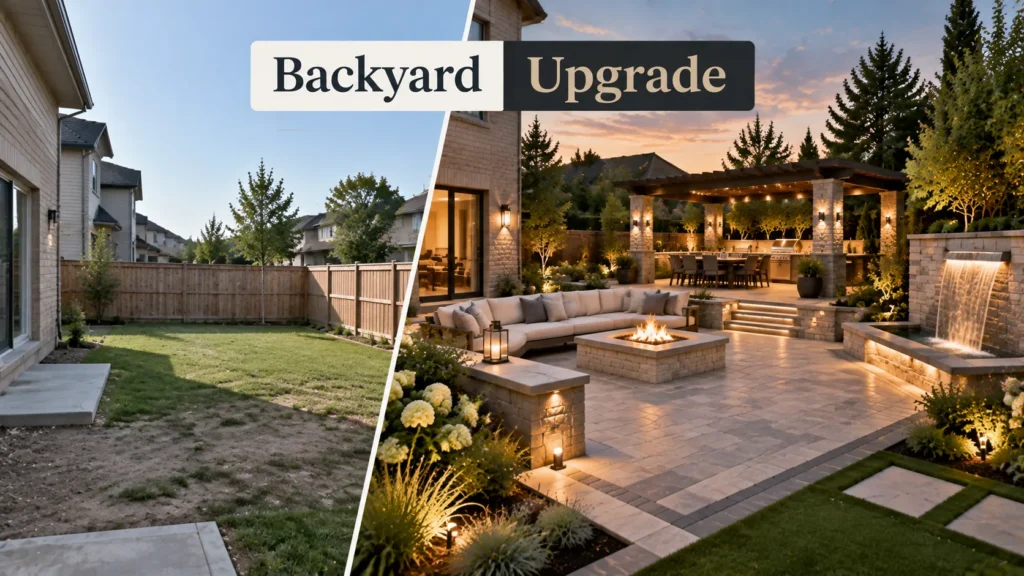
The strongest backyard projects treat an outdoor fire feature as one component of a complete outdoor environment.
For a Toronto homeowner, that means thinking beyond the flame itself.
The surrounding patio, landscape design, seating, material palette, circulation, privacy, and relationship to the house all influence whether the finished space feels intentional.
Everstruct can help homeowners approach the project as a cohesive backyard design rather than a collection of disconnected features.
Planning a Toronto Backyard Renovation?
Before selecting a fireplace or fire pit, start with the complete space. Consider your property, intended use, architectural style, circulation, materials, and applicable requirements.
Explore Everstruct’s outdoor design and construction services at Everstruct and discuss your backyard vision with a professional before making a major installation decision.
Outdoor Fire Feature Safety Checklist
Before using your new outdoor fire feature, confirm that:
- The appliance is approved for its intended use.
- Installation follows the manufacturer’s requirements.
- Required clearances are maintained.
- Combustible materials are appropriately separated.
- Seating does not obstruct safe access.
- The fire can be supervised properly.
- You have appropriate fire-safety equipment available.
- Fuel connections, where applicable, are installed correctly.
- Local regulations have been checked.
- Current fire bans or restrictions have been reviewed.
Ontario emphasizes that people who start outdoor fires are responsible for tending, controlling, and extinguishing them safely.
Frequently Asked Questions
Is an outdoor fireplace better than a fire pit?
Neither is universally better. A fireplace is usually better for creating a vertical architectural focal point and defined seating area, while a fire pit is often better for social gatherings where people sit around the flame.
What is the best outdoor fire feature for a small backyard?
A compact gas fire table or appropriately scaled fire pit can work well in a smaller backyard, provided required clearances and local regulations are followed. The installation should be sized around the seating and circulation requirements of the space.
Are fire pits allowed in Toronto backyards?
Toronto generally prohibits open-air burning without authorization, but the city provides specific conditions under which certain compliant gas fire pits may be used. Wood-burning fire pits are not treated the same way. Always check the current City of Toronto requirements before installation.
Is gas or wood better for an outdoor fire feature?
Gas is often preferred for convenience, controllability, and contemporary design. Wood provides a traditional fire experience. The better option depends on the intended use, installation conditions, maintenance preferences, and applicable regulations.
How should I position an outdoor fire feature?
Positioning should account for seating, circulation, sightlines, wind, structures, vegetation, combustible materials, and manufacturer-required clearances. The best location is the one that integrates the fire element into the entire backyard rather than treating it as an isolated object.
Can a fire feature increase the value of a backyard?
A well-designed fire element can improve the usability and visual appeal of an outdoor living space, but its value depends on the overall quality of the backyard design. It should complement the property rather than become an expensive feature that does not suit the way the space is used.
Choose the Fire Experience, Not Just the Fire Feature
The best outdoor fire feature is not necessarily the largest, most expensive, or most visually dramatic option.
It is the one that fits your lifestyle, backyard dimensions, architecture, seating plan, maintenance preferences, and local requirements.
Choose a fire pit when you want a social centre where people can gather around the flame. Choose an outdoor fireplace when you want a stronger architectural focal point and a defined outdoor room.
For Toronto homeowners, compliance and safety should be part of the design from the beginning not something checked after installation.
If you’re planning a backyard transformation, start by designing the complete outdoor living environment and then choose the outdoor fire feature that strengthens it. A thoughtful design can turn an ordinary patio into a comfortable, functional space that feels like a natural extension of your home.
Ready to plan your Toronto backyard? Visit Everstruct to explore your outdoor design and construction options and start building a space around the way you actually live.